
Creating More Chances to Belong
At Cooper City Elementary in Cooper City, Florida, kindness is helping students find their way back to one another. The school serves about 750 students in a diverse suburban community outside Fort Lauderdale, and kindness champion Linda Signorelli has spent years creating structures that help children connect, talk, and feel that they belong.
Signorelli has been at the school for 37 years—25 as a classroom teacher and the last 11 as a school counselor. She has taught students who are now parents at the school, and that long history shapes how she sees the work. In a time when many students need more support with resilience, social problem-solving, and everyday interaction, she has focused on creating more structured chances for them to socialize and connect.
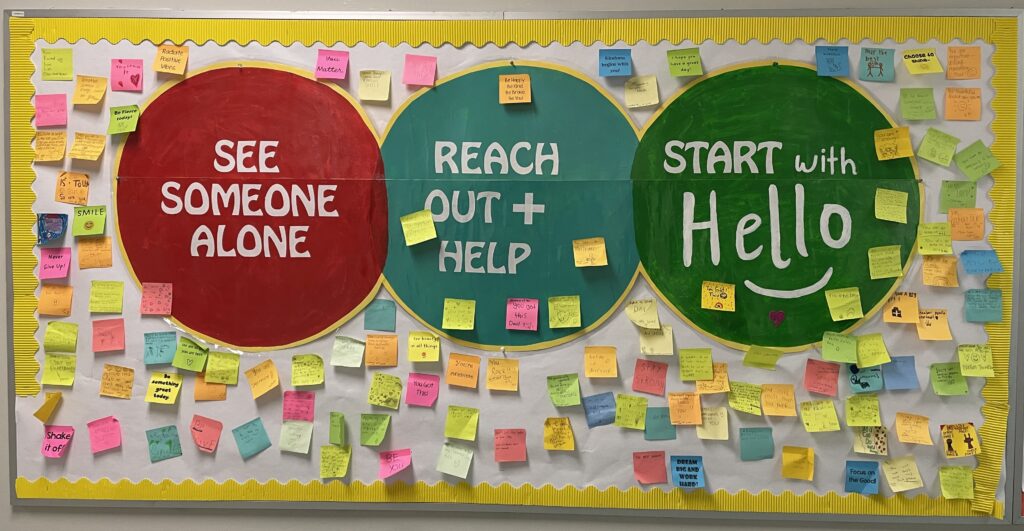
Classes buddy up with another classroom and do something together: read a book, go on a nature walk, or sit and talk. Signorelli says those moments may look small, but for a generation of students who spend more time on screens and less time in face-to-face conversation, the practice matters. Cooper City also brings its definition of kindness to life through schoolwide efforts such as Start With Hello, Mix It Up Lunch, a Positive Sticky Note board, biweekly life-skills instruction, and recognition on the school’s morning show. The Teach Kindness lesson Learning from Differences supports that work by helping students build understanding and more openhearted peer relationships.
One of the clearest examples of kindness in action came through a student who began helping guide a classmate who is blind through the school day, walking her from classroom to classroom. Signorelli wrote an award for both of them. The student doing the helping had struggled academically, and the experience gave her confidence in a role where she could lead. “She just did it because she wanted to,” Signorelli says.
The school has also seen a shift since opening an autism cluster two years ago. Students buddy across classrooms, visit one another, and share activities. That familiarity has helped children become more comfortable with peers whose needs may look different from their own.
Signorelli is quick to stress that the work belongs to the whole staff. “It’s been a collaboration across the whole school,” she says. At Cooper City, that collaboration shows up in steady, repeated chances for students to connect and in a school culture that keeps making more room to belong.