
Starting the Day With Belonging
Each morning at Earnest O. Woods Intermediate School in Wills Point, Texas, more than 600 students in second through fourth grade gather in the gym. Students take the lead in reciting the pledges. A few are invited to share something positive that’s happened to them during “Good Things.” Then, as a whole, everyone joins in the school’s launch: “We will grow our hearts and minds while dreaming big and flying high.” The school’s shared understanding of kindness—helping others, showing respect, and acting selflessly—grew out of this daily ritual, shaped with input from students across all 34 classrooms.
From there, the day unfolds. Student greeters welcome their peers in the hallways. Fourth graders take turns helping younger students in the cafeteria and in classrooms. Teachers stand at their doors, greeting each child by name. Before lessons even begin, the atmosphere for the day is already in place.
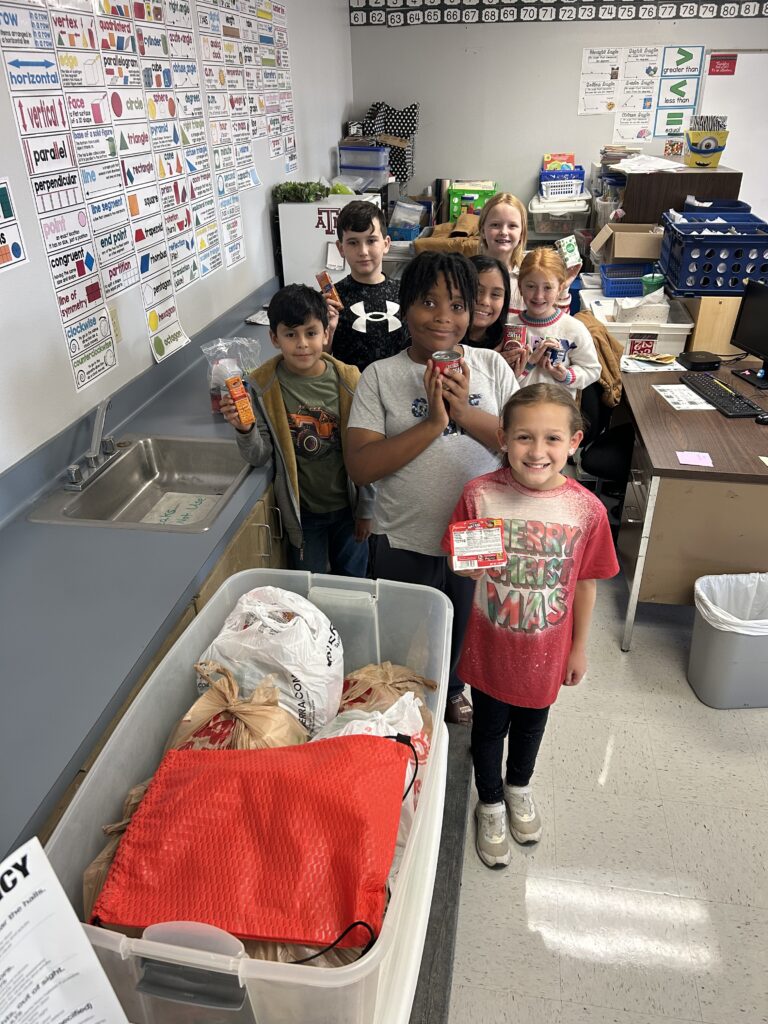
Counselor Sheila Lewis, now in her fifteenth year in the role and her fifth at Woods, carries that same sense of purpose into her work. She teaches lessons such as STOP!, Personal Slogans, and Good and Bad Teasing, encouraging students to see kindness as more than just polite words. “They’ll want to say something kind, such as ‘your hair looks pretty,'” she explains. “But I’m really pushing them to get deeper than that, to actual helpfulness.” That mindset is beginning to show in how students notice and care for others. Some even stop by her office on their own, just to check in. “They’ll say, ‘Ms. Lewis, are you doing okay?'” she says. “They can tell by my face if I’m working hard. For them to pay attention to grown-ups, too, that’s a big deal to me.”
These skills are also shaping how students navigate conflicts. Recently, a fourth grader approached Mrs. Lewis, upset that a friend hadn’t been honest. When Mrs. Lewis asked how she could help and what outcome the student wanted, the student said she was hoping for a fresh start. Mrs. Lewis invited the other student in and asked if the first girl wanted help beginning the conversation. “She said, ‘If you could just start us out,'” Mrs. Lewis recalls. “So I gave them one sentence, and they led right into it.” The two students talked through the issue and agreed to be honest with each other moving forward. Conversations like this are becoming more common at Woods, as students gain the language to express what they need.
Principal Hollie Groom sees the impact of all this clearly. “You can feel it when you come into this building,” she says. “A sense of family.”