
School Counselor Yannine Gonzalez likes to quote Bad Bunny when she talks about her work at Moton Elementary. “He says the only thing stronger than hate is love,” she explains. “Kindness plays into that.” It’s the belief behind everything she does — the small-group lessons, the hallway check-ins, and the conversations where students learn their words carry weight.
Moton is small, with an enrollment of 127 students in Miami’s West Perrine neighborhood. Gonzalez sees that as an advantage. A smaller building means she knows every child and can reach the ones who need more.
She wants school to feel like a haven — a place where, even if everything else is uncertain, students know there’s an adult who listens and a space where they’ll be met with care. “Even if it’s just one person,’ she says, ‘they know: as long as I have this place, I’m going to be okay.”
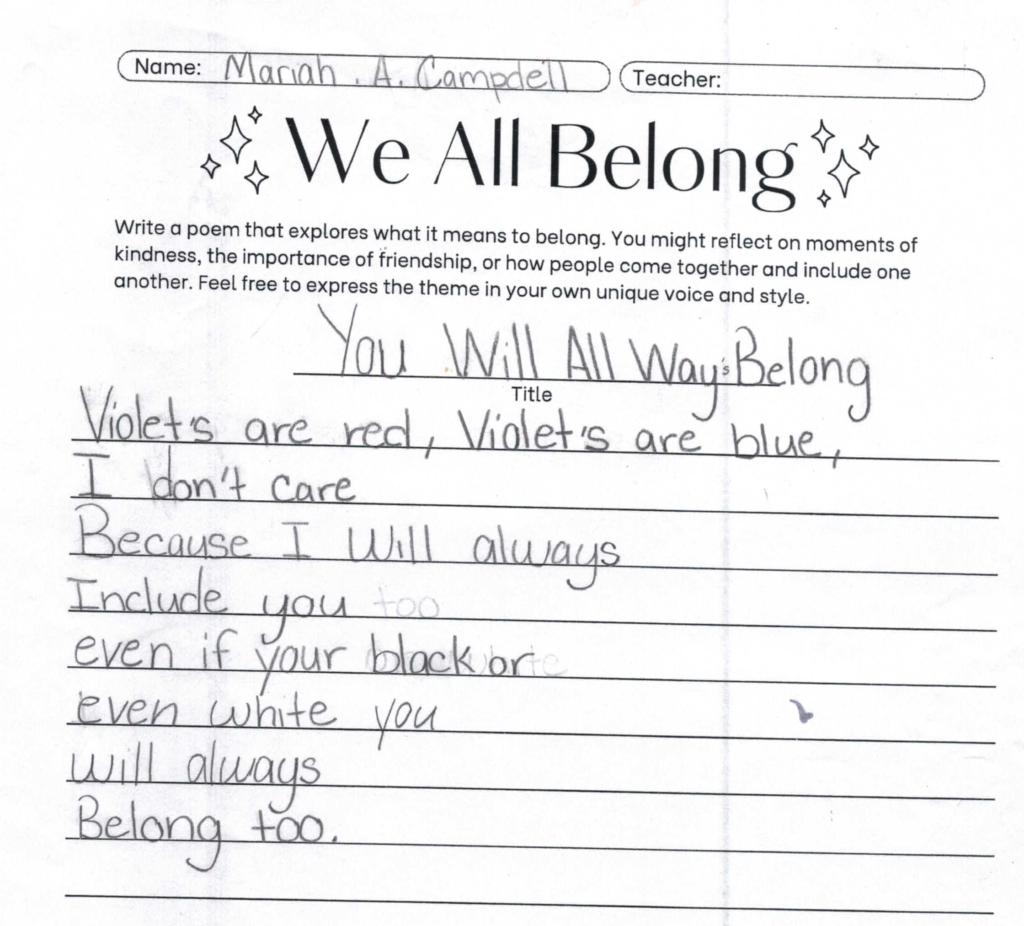
That’s more than a philosophy. It shapes how the school teaches kindness as a skill. Through Teach Kindness lessons, one-on-one conversations, and schoolwide activities like a poetry contest on belonging, Gonzalez and her colleagues show students that being kind is something you can practice and get better at. A big part of that work is language. Gonzalez has watched students pick up habits from social media, “the clapbacks, the shade,” and she addresses it head-on. “The same way we wouldn’t put our hands on someone to hurt them, our words matter just as much.”
She tells the story of a fifth grader who made a remark about her makeup during the book fair. Rather than reacting, Gonzalez walked her through it: what if someone said that to you? Was it kind? The student sat with it. By the end of the day, she came back on her own. “I understand now. What I said wasn’t kind. I’m sorry.”
Those small moments are adding up. In the kindergarten wing, students have started resolving conflicts without adult help. One recently gathered her classmates like a detective to figure out whether a playground push was intentional, then helped everyone work it out themselves. First graders are learning to look out for one another; one told Gonzalez recently, “He’s sad, but he doesn’t want to say anything. Can you please go talk to him?”
Older students are building the same awareness. Gonzalez describes one boy who now recognizes when he’s getting uncomfortable and seeks out a safe adult before things escalate. “It’s like a different child from last year,” she says. “And that’s because we’re teaching him these skills.”
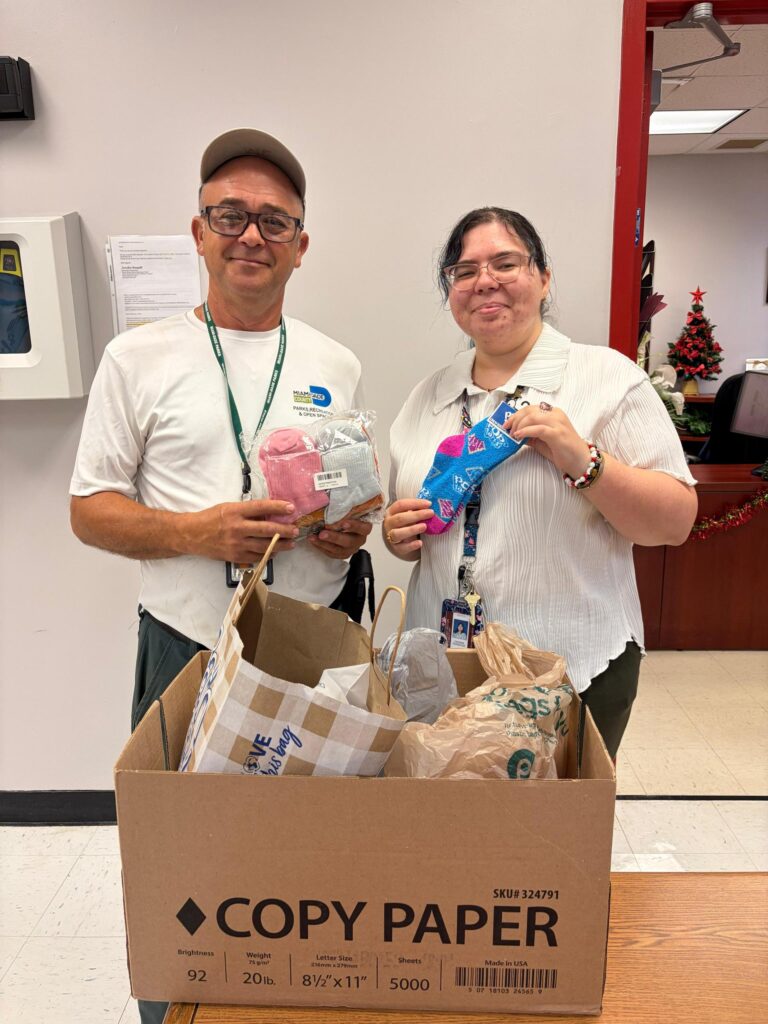
That same impulse — looking out for each other — has extended beyond the building. A Sock Drive for Homelessness Awareness gave students a chance to contribute to their own community. First graders brought in donations eagerly, excited to imagine who might receive them. For Gonzalez, it was a lesson in reciprocity: when you have something to give, you give. That spirit is what sets Moton apart. Not metrics, but care. The staff shows up every day with intention, and the students are learning something that will outlast any benchmark: how to take care of each other.
Gonzalez puts it simply: “We are stronger together than we are divided. And that idea of unity — it’s rooted in kindness.” She smiles. “Kindness is king.”