
A Community That Knows How to Welcome
Berry Intermediate School in Lebanon, Ohio, serves around 800 fifth and sixth graders, and its counseling team knows every one of them. “We meet with every single child,” says counselor Lauren Kreps. “So when I’m speaking about how proud I am of them, it’s because I have met them all individually.”
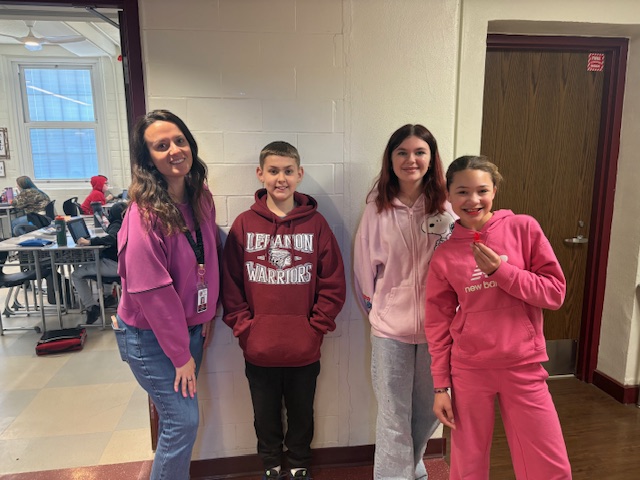
Lebanon has a small-town heart even as its population grows. Students typically already know something about how to make room for others and how to welcome new students. That strength matters to the adults guiding the school’s kindness work, because Berry’s effort is not about inventing a culture from scratch. Rather, it is about deepening something good, protecting it, and helping students grow into it more intentionally.
The school’s definition of kindness has real strength to it: kindness means doing the right thing, even when it is hard. The full definition also speaks about using what you have to help others, making sacrifices, being respectful, and choosing hope. Students created classroom definitions and then voted on the one that would represent the school. The result gives kindness moral weight. It asks students to see kindness not as a surface-level niceness, but as courage and action.
Teachers bring those ideas into classrooms through Teach Kindness lessons like Finding Common Ground, The Gratitude Muscle, and ART of Apology. The counseling team shared the lessons and gave teachers room to adapt them to their own classrooms. That flexibility helped build buy-in: “teachers ran with it,” counselor Jillian Laman shared.

Berry’s most enduring tradition is its annual food drive, led by a fifth-grade team and embraced by the whole building. Over seven-plus years, it has grown into one of the largest donations the local food pantry receives. Students run every part of it: counting inventory, picking up deliveries, and making announcements about which homeroom is in the lead. Families send in bags of donations knowing the food goes to people in their own community.
Most recently, the counselors are noticing a shift in how students respond to unkindness. More fifth graders are coming forward, unprompted, to ask what they should do when they see someone being treated badly. “They’re asking me: what do I do? How can I stop it?” Jillian Laman says. “At such a young age, to have that confidence is great. I don’t think I had that when I was in fifth grade.” In a school where kindness has always come naturally, students are choosing to be kind: stepping forward to do what’s right, even when it’s difficult.