
At Carter Traditional Elementary, they call themselves a school family – and mean it.
Under the leadership of Principal Dr. Whitney Hodge, this Louisville school has built a culture around a clear, deeply held philosophy: before students can learn, they need to feel safe, supported, and cared for. And because a school culture can only be as strong as the people who sustain it, that belief extends to adults, too.
It was not always this way: when Dr. Hodge arrived three years ago, staff morale had slipped, and some veteran teachers were thinking about leaving. The school did not need another initiative, so much as a renewed sense of trust, consistency, and shared purpose.
Dr. Hodge set out to rebuild this foundation by centering relationships, making sure that each and every person in the building felt valued. “I love all my people real hard,” Dr. Hodge says. “And if that means it takes away from my day-to-day and me getting assignments turned in on time with the district, that’s okay. That’s the price I’m willing to pay to make sure my staff and my students are loved.”
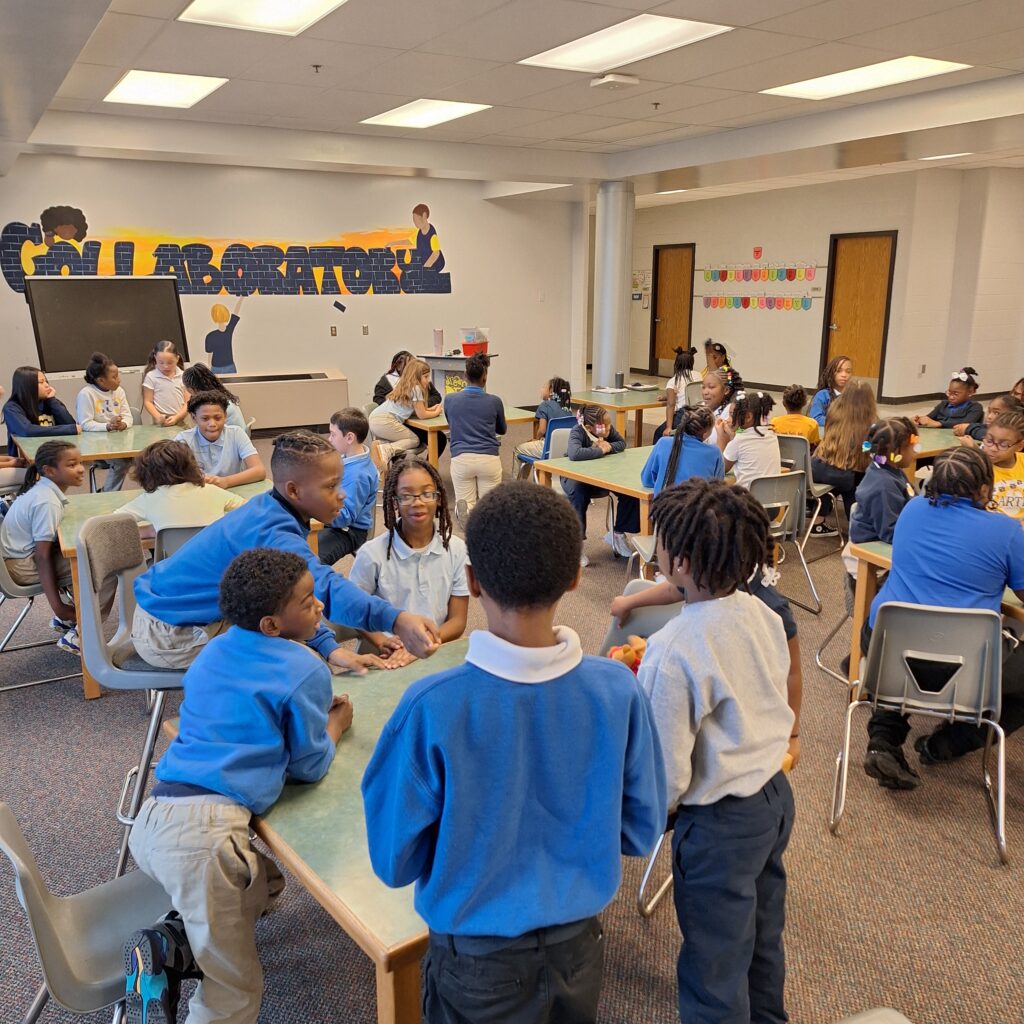
This philosophy of creating a safe and supportive school environment for everyone in the school building is reflected in the decisions that shape daily life at Carter. For instance, Dr. Hodge knows how important it is for children to see themselves in the adults around them, therefore she made a deliberate effort to hire staff who reflect the Park DuValle community Carter serves.
Dr. Hodge is also candid about the realities many students face, acknowledging that they often arrive at school carrying a great deal with them. She is just as quick to highlight the deep involvement and support of families. Carter’s work is grounded in both understanding students’ needs and building on the support systems already present in their lives.
Carter’s educators build on this foundation by teaching students to show up for one another. One of their clearest goals has been helping students learn how to respond to conflict differently. Slow down. Use your words. Regulate yourself. Staff are teaching students how to name their feelings and make a different choice in the moment. “People are going to get on your nerves all throughout life,” says Assistant Principal Ms. Jones, “and you can’t just hit them every time.”
The Teach Kindness framework gave the team, Dr. Hodge, School Counselor Ms. Finnell, and Ms. Jones a shared language to build those lessons into the school day. Ms. Finnell leads monthly character lessons that pair themes like honesty, respect, and perseverance with kindness. March has become Kindness Month, and this year Ms. Finnell is launching Carter’s first student-led Kindness Club.
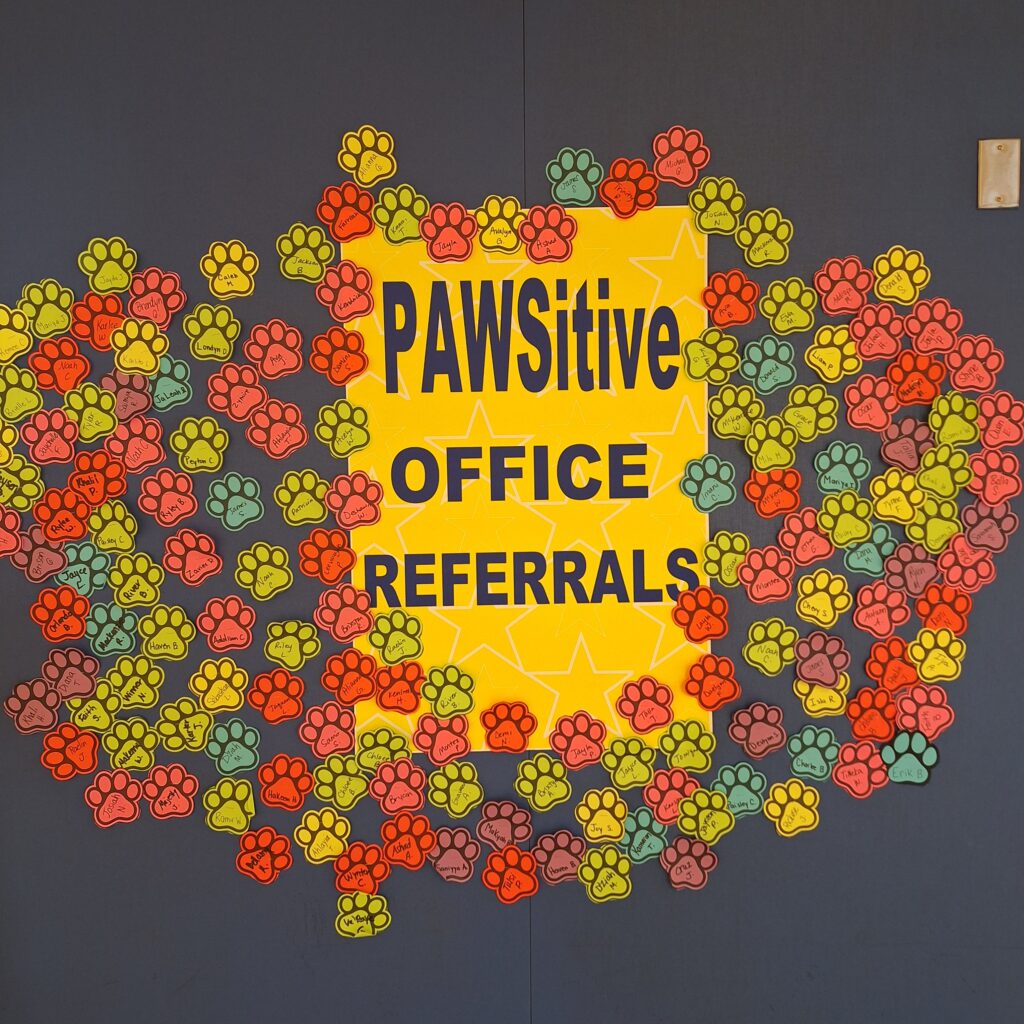
The shift is visible in the hallways. PAWSitive Office Referrals— recognitions for students caught doing the right thing—are posted where everyone can see them. Students who once reacted physically are learning to use their words instead. Teachers now model those same strategies openly, telling students, “I’m doing this because I’m feeling overwhelmed.”
For the staff who stayed through the hard years and helped rebuild the culture, that progress feels especially meaningful. What once required constant attention has become part of the school’s daily rhythm, for students and educators alike. As Dr. Hodge says, “To see that we’ve had this much growth in such a short time — and it’s not phony, we’re not doing it to check a box — this is just who we are now.”